
We usually think about menopause as a hormonal transition. But emerging research suggests there is another piece of the puzzle: the gut microbiome. Here’s what we currently know about the relationship between food, gut bacteria and oestrogen — and what it might mean for women in midlife.
If your digestion seems to have changed since perimenopause or menopause, you are certainly not alone.
Bloating, changes in bowel habits and feeling as though foods you have eaten for years suddenly don’t agree with you are common reasons women come looking for nutrition support.
At the same time, researchers are becoming increasingly interested in the relationship between our gut microbiome and our hormones — particularly oestrogen.
A 2026 scientific review, Diet, the Gut Microbiome, and Estrogen Physiology: A Review in Menopausal Health and Interventions, brings much of this emerging research together. Its authors describe a complex, two-way relationship between oestrogen and the gut microbiome, particularly during the menopause transition. (MDPI)
And this is where something called the estrobolome comes in.
Key takeaways
🌿 Your gut microbiome may influence how oestrogen is metabolised, but it does not “control” your hormones.
🌿 There is no single “ideal” menopause microbiome or probiotic that balances oestrogen.
🌿 Diet can support gut bacteria, but the effects are individual and not one-size-fits-all.
🌿 Menopause changes the body and the microbiome in complex, bidirectional ways.
🌿 The goal is support, not “detoxing” or fixing hormones through food alone.
First: what exactly is the gut microbiome?
Your gut microbiome is the enormous community of microorganisms living within your gastrointestinal tract.
These microorganisms don’t simply sit there.
They interact with components of our diet, produce metabolites, participate in bile acid metabolism and interact with immune and metabolic processes throughout the body.
And importantly for this discussion, some gut microbes also participate in the metabolism of oestrogens. (MDPI)
That subset of microbial activity has become known as the estrobolome.
What is the estrobolome?
The estrobolome isn’t a particular bacterium you either have or don’t have.
It is a term used to describe the collection of gut microbial genes capable of metabolising oestrogens.
One of the mechanisms researchers are particularly interested in involves bacterial enzymes called β-glucuronidases.
Very simply, after oestrogens have been metabolised in the liver, some are conjugated (chemically tagged for removal) and excreted through bile into the intestine.
Certain gut bacteria produce β-glucuronidase enzymes that can deconjugate some of these oestrogens. This may allow them to be reabsorbed into the circulation rather than eliminated.
So there can be a cycle involving:
Oestrogen → liver → bile → gut → microbial metabolism → possible reabsorption
Laboratory research has demonstrated that particular bacterial β-glucuronidase enzymes are capable of reactivating oestrogens, providing a biological mechanism for this gut–oestrogen interaction. (PubMed)
It is fascinating biology.
BUT it is also where we need to be careful not to jump from “this mechanism exists” to “fix your gut and you will balance your hormones.”
Those are NOT the same thing.
Menopause may change the microbiome too
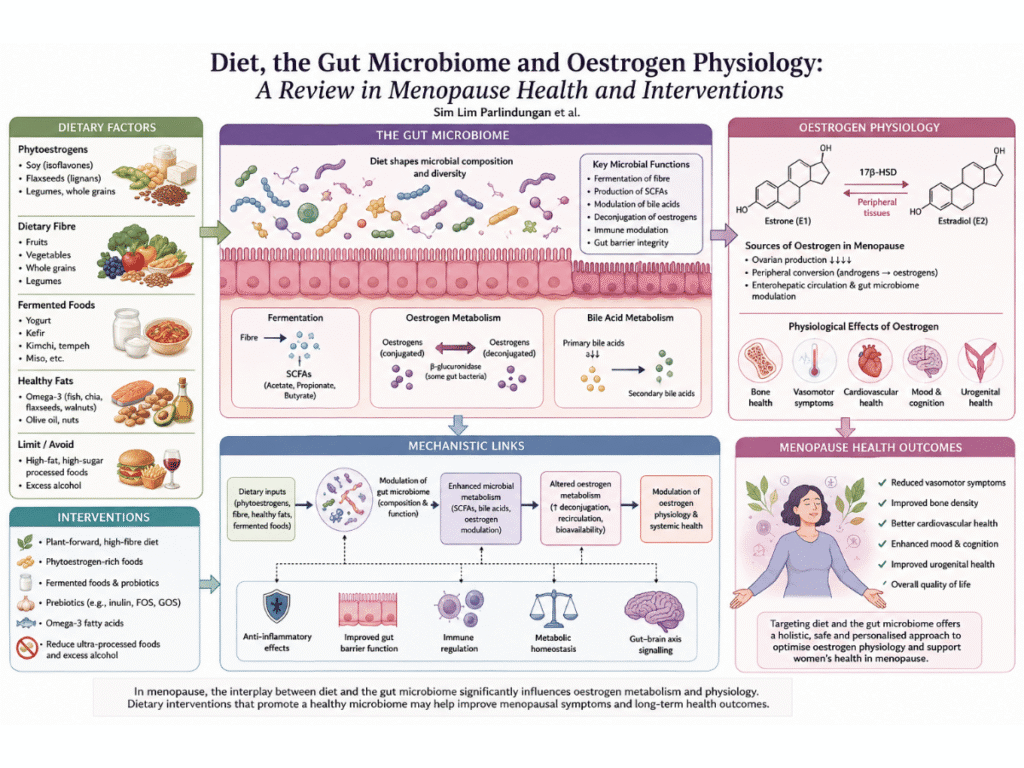
The relationship appears to work in both directions.
The microbiome may influence aspects of oestrogen metabolism, while changes in oestrogen concentrations may themselves influence the microbial environment of the gut.
Research comparing premenopausal and postmenopausal women has found differences in gut microbial composition and function, although researchers have not identified one universal “menopause microbiome”. Results vary considerably between populations. (PubMed)
A 2026 meta-analysis examining women with lower oestrogen states also found that the evidence for specific microbiome alterations remains inconsistent. (PubMed)
And I think that’s an important point.
There isn’t currently a checklist of “good menopause bacteria” that every woman needs. Our microbiomes are influenced by diet, medications, geography, environment, age, lifestyle and many other factors.
The authors of the 2026 review specifically note that no ideal gut microbial composition has yet been identified for women across perimenopause and menopause. (ResearchGate)
So if someone is selling you the idea that one probiotic, supplement or microbiome score can tell you exactly how well you are “clearing oestrogen”, I’d be cautious.
The science simply isn’t that precise yet.
So where does food fit in?
This is probably the most useful part.
We might not be able to engineer the perfect microbiome, but diet is one of the factors capable of influencing microbial composition and activity.
And the foods that appear repeatedly in this research aren’t particularly exotic.
Think:
🌿 vegetables
🌿 fruit
🌿legumes
🌿whole grains
🌿 nuts and seeds
🌿 foods naturally rich in polyphenols
🌿sources of healthy fats
🌿 fermented foods where they are tolerated
The 2026 review discusses dietary fibre, phytoestrogens and other dietary components as potential modulators of the gut microbiome and oestrogen-related physiology. (MDPI)
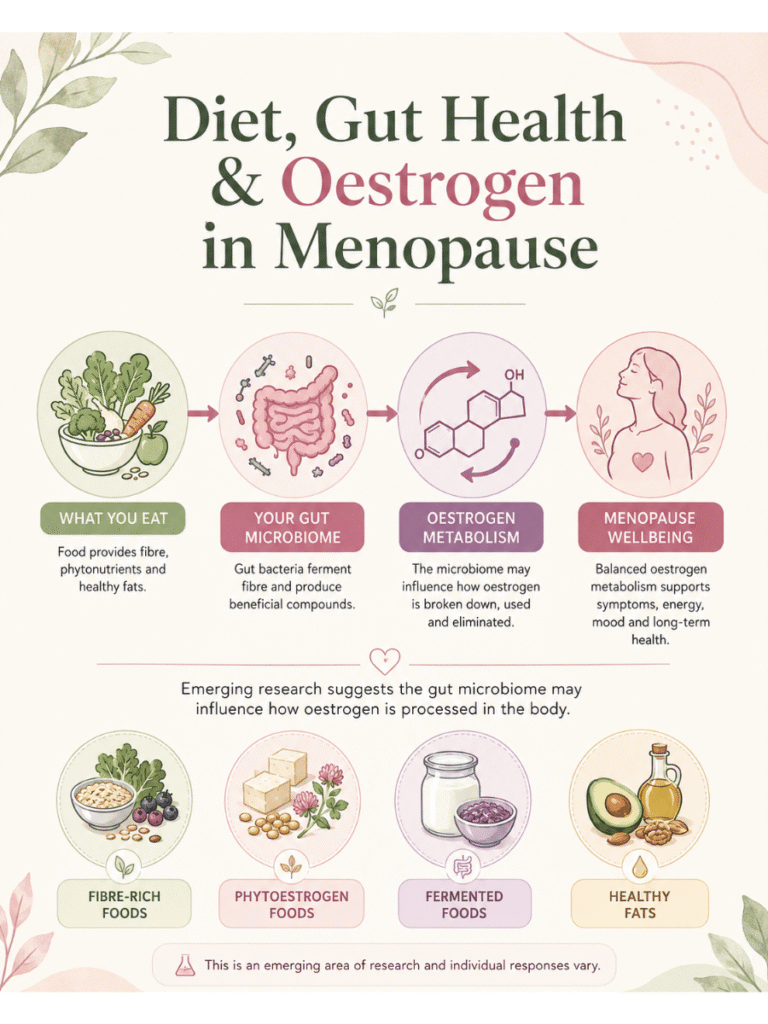
Let’s look at a few of them.
Fibre
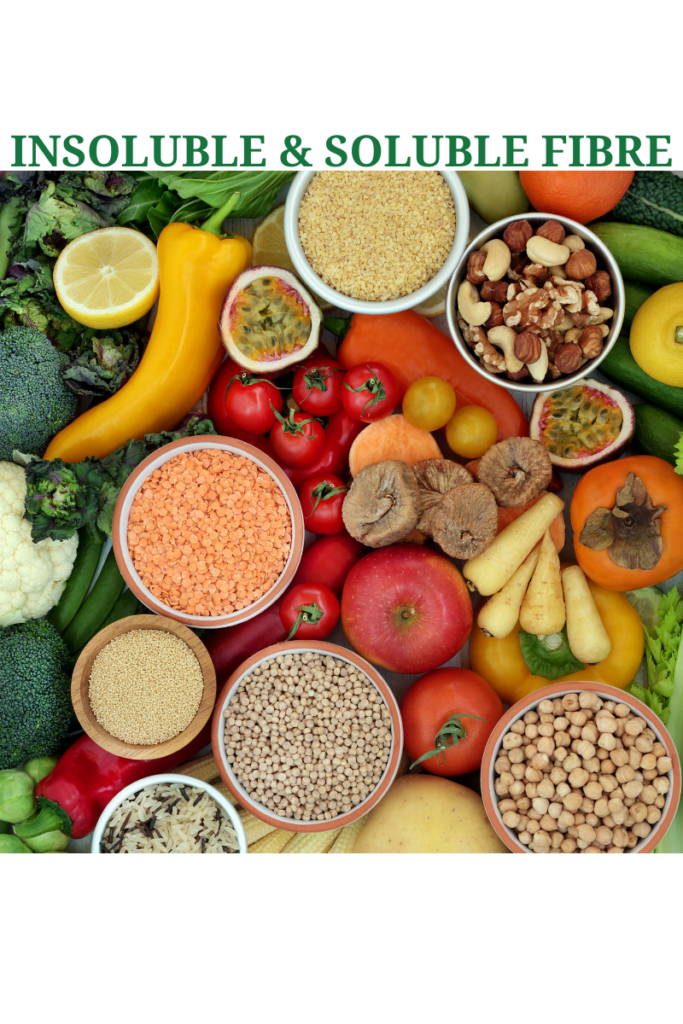
Our digestive enzymes can’t completely break down many types of dietary fibre.
Instead, gut bacteria can ferment some fibres, producing compounds including short-chain fatty acids such as acetate, propionate and butyrate.
These microbial metabolites are involved in a range of intestinal and metabolic functions, which is one reason dietary fibre continues to receive so much attention in microbiome research. (MDPI)
But this doesn’t mean going from very little fibre to enormous bowls of bran and chickpeas overnight.
Particularly if you are already bloated or have digestive symptoms.
In practice, I would much rather see fibre increased gradually and according to the individual.
For one woman that might mean adding some oats, berries and chia.
For another it could be increasing cooked vegetables.
Someone else may tolerate legumes beautifully.
Another woman may need a much slower introduction.
Your gut doesn’t care what’s trending on Instagram.
Phytoestrogen-containing foods
Phytoestrogens are naturally occurring plant compounds with structural similarities to oestrogen.
Foods containing them include:
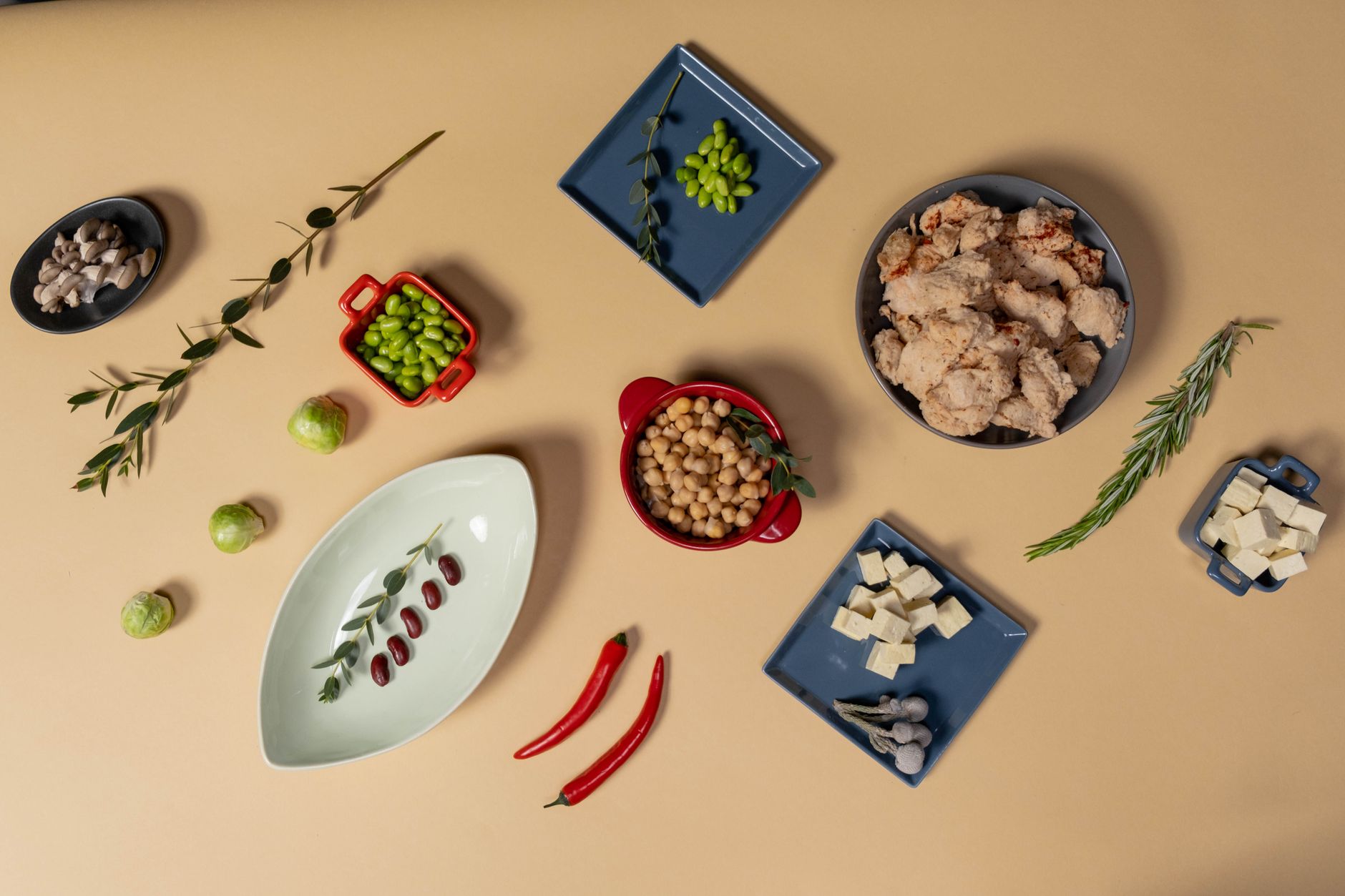
• soy foods such as tofu, tempeh and edamame
• flaxseed
• legumes
• some whole grains, seeds, fruit and vegetables
The relationship becomes particularly interesting because gut microbes help metabolise some phytoestrogens into other biologically active compounds.
And again, individual differences matter.
One of the best-known examples is the conversion of the soy isoflavone daidzein into equol.
Not everyone has the microbial capacity to produce equol efficiently.
This is a good example of why two women can eat the same food but experience different biological responses — something the current literature continues to investigate. (PubMed)
Fermented foods
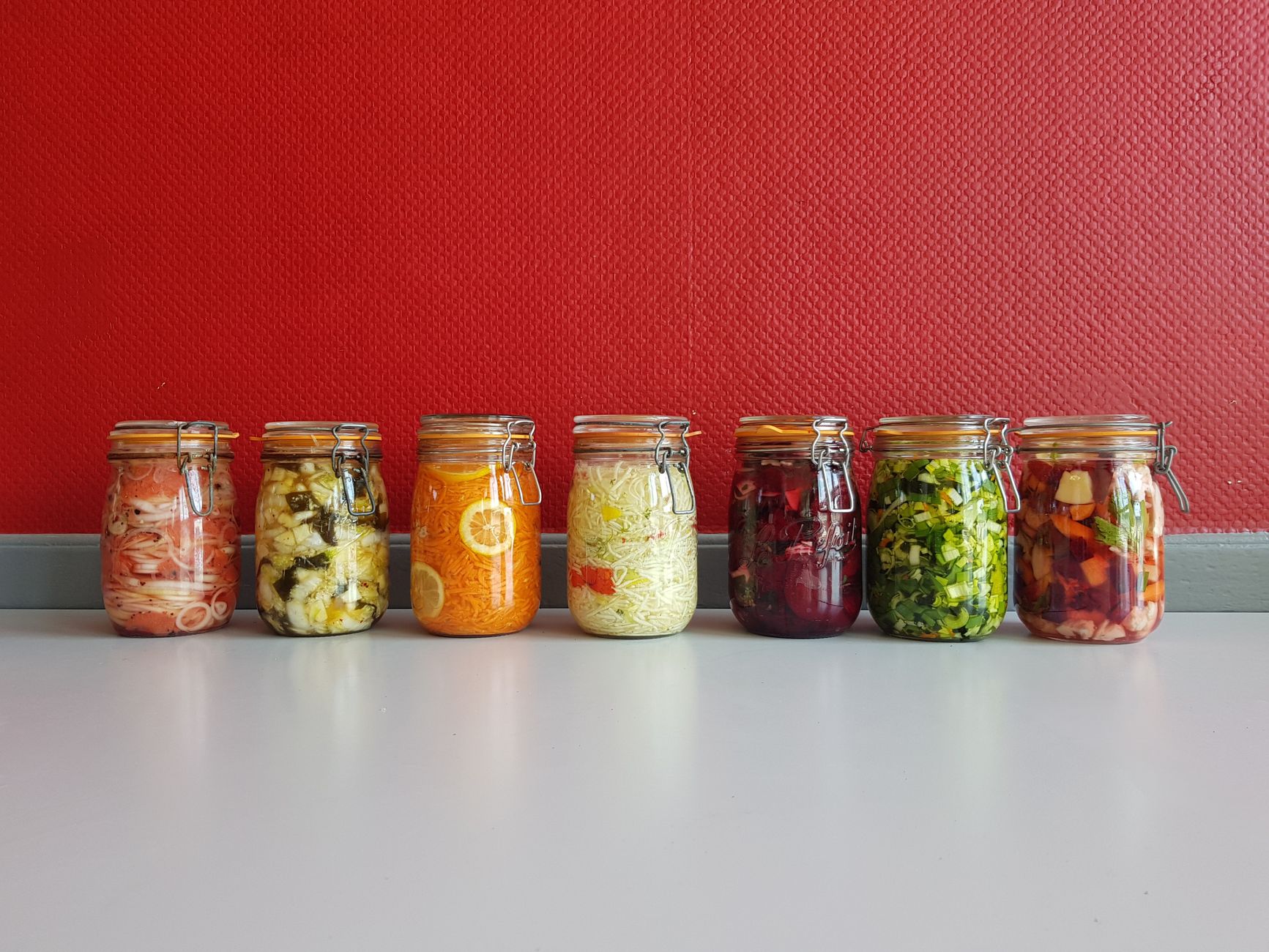
Yoghurt, kefir, kimchi, sauerkraut, miso and other fermented foods can introduce microorganisms and microbial products into the diet.
They’re interesting from a microbiome perspective, but fermented foods aren’t compulsory for good gut health and they don’t suit everybody.
A woman who becomes painfully bloated after eating sauerkraut doesn’t need to force herself to eat it because someone told her it’s “good for the microbiome”.
There is growing interest in both probiotics and prebiotics during menopause, but reviews continue to describe the clinical evidence as limited and call for better studies before specific strains or protocols can routinely be recommended for menopause-related outcomes. (PMC)
Food tolerance still matters.
Does this mean gut health can increase your oestrogen?
This is where the conversation can become misleading very quickly.
No — we cannot currently say that eating particular foods will restore declining ovarian oestrogen production during menopause.
Menopause involves a fundamental change in ovarian hormone production.
The microbiome may influence the metabolism and recirculation of oestrogens that are present, but that is very different from saying that changing the microbiome can replace the oestrogen previously produced by the ovaries.
The research is exploring modulation, not a dietary replacement for ovarian function. (MDPI)
Nutrition can be an important part of supporting health through menopause.
It should not be sold as a substitute for appropriate medical care or menopause hormone therapy when that is clinically indicated and chosen in consultation with an appropriate medical practitioner.
What about “oestrogen detox”?
You’ll often see the estrobolome used online alongside terms such as:
“detox excess oestrogen”
or
“clear bad oestrogen from your body.”
That’s not language I find particularly useful.
Your liver, gastrointestinal tract and kidneys already have sophisticated systems involved in metabolising and eliminating substances.
What nutrition can do is provide the foods and nutrients that support normal physiological processes, bowel function and an appropriately varied diet.
That is very different from needing a special cleanse, detox tea or supplement protocol.
You don’t need to detox your hormones.
What does this mean practically?
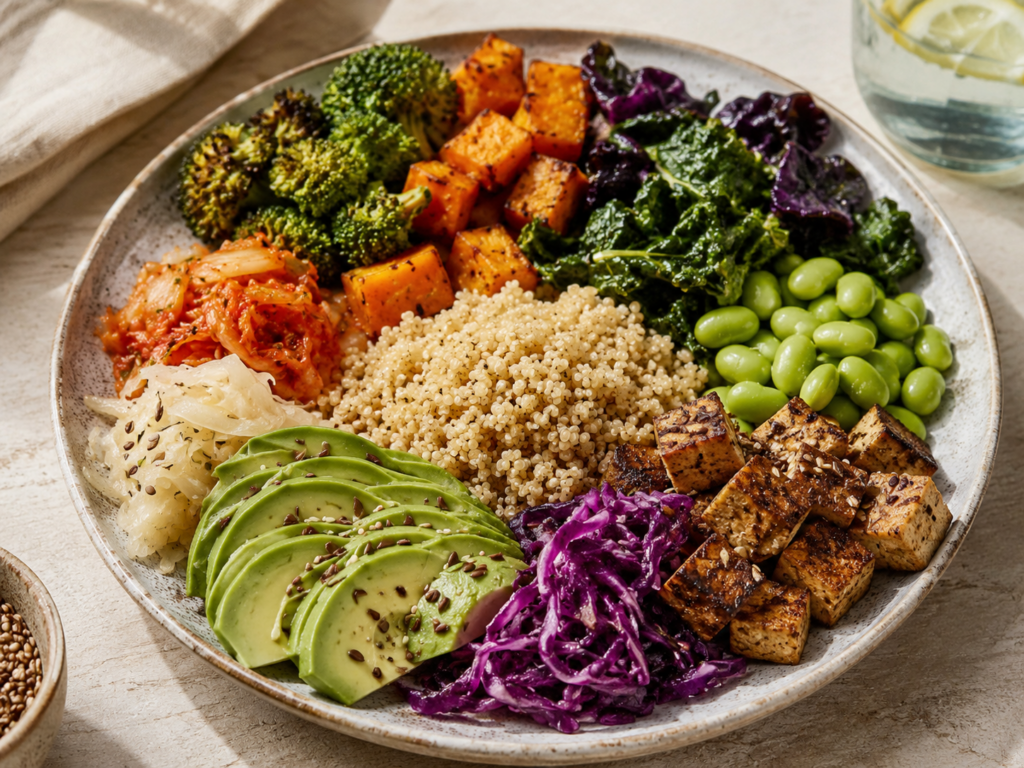
The research is exciting, but the practical message is surprisingly ordinary.
Rather than chasing a perfect microbiome, I would start with the foundations.
Aim for variety
Instead of eating the same vegetables every day, rotate colours, plant foods and fibre sources where your digestion allows.
Build fibre gradually
More isn’t automatically better.
Your current intake, bowel habits, symptoms and tolerance matter.
Include protein and healthy fats too
Supporting your health through menopause involves far more than the microbiome. Muscle, bone, metabolic health, energy and overall nutritional adequacy still matter.
Don’t unnecessarily remove foods
If you are already avoiding gluten, dairy, legumes, onions, garlic, fruit and half the vegetable aisle because you’re scared of bloating, removing even more foods probably isn’t the best place to start.
Sometimes the question isn’t:
“What should I cut out?”
It’s:
“Why am I struggling with these foods in the first place?”
Pay attention to bowel habits
Regular bowel function is an important part of normal gastrointestinal physiology.
Constipation is worth addressing rather than simply accepting as another midlife symptom.
Personalise it
This might be the most important point of all.
There is currently no single microbial signature that defines a healthy woman in menopause, and studies show substantial variation between populations and individuals. (ResearchGate)
So there is unlikely to be one perfect “menopause gut diet” either.
Do you need a microbiome test?
Not automatically.
Microbiome science is advancing rapidly, but commercial testing can sometimes give us far more data than clinically actionable answers.
A microbiome report showing that one bacterial species is “low” doesn’t necessarily mean we need to replace it.
Likewise, finding a bacterium labelled “high” doesn’t automatically mean it is causing your bloating, weight changes or menopause symptoms.
Testing can have a role in selected circumstances, but I wouldn’t start there simply because you have reached menopause.
Start with the woman, her symptoms, her diet, her medical history and what is actually happening.
Then decide whether additional investigation is useful.
The bigger picture: your gut and your hormones aren’t separate systems
Perhaps the most interesting takeaway from this research is that menopause doesn’t happen in isolated compartments.
Oestrogen interacts with multiple tissues and physiological systems.
The gut microbiome interacts with diet, metabolism and our intestinal environment.
And these systems interact with each other.
The 2026 review describes this relationship as bidirectional: oestrogen can influence the gut microbiome, while microbial activity may influence aspects of oestrogen metabolism. (MDPI)
But the science is still evolving.
We don’t yet have enough evidence to prescribe a particular microbiome composition for menopause.
We don’t have one probiotic that “balances oestrogen”.
And we certainly don’t need another restrictive hormone diet.
What we do have is another reason to pay attention to diet quality, plant diversity, fibre tolerance, digestive function and individual response.
And perhaps most importantly, another reminder that the right nutrition approach is rarely identical from one woman to the next.
If your digestion has changed in menopause, Gutsy Clarity can help
If you’ve spent months cutting foods out, trying different supplements or wondering why the foods you used to tolerate suddenly seem to leave you bloated and uncomfortable, you don’t necessarily need another list of foods to avoid.
You may need someone to look at the whole picture.
That’s exactly why I created Gutsy Clarity
Personalised nutrition support for women in perimenopause and menopause who want to better understand what’s happening with their digestion, energy and eating, without another restrictive diet.
I look at your current diet, symptoms, bowel habits, menopause stage, lifestyle and nutritional adequacy, the work out what’s actually worth changing for YOU.
Because, as the microbiome research continues to show, there is unlikely to be one perfect menopause diet, and there certainly isn’t one approach that works for every woman.
Not sure whether Gutsy Clarity is what you need?
What you get:
💚 A 75-minute one-to-one where we look properly at your symptoms, digestion, history and eating
patterns, and make sense of what’s actually going on for you now.
💚 A 30-minute follow-up to check in and adjust
💚 A written, personalised nutrition plan
Book a FREE 20-minute chat to 20- minute chat with me. We can talk through what’s been happening, what you’ve already tried and whether working together would be useful.
A final note on the science
This is an emerging area of research.
Much of the evidence exploring the menopause–microbiome–oestrogen relationship is observational or mechanistic, and studies don’t always produce consistent findings between populations. More clinical research is needed before specific microbiome interventions can be recommended for managing menopause symptoms or modifying oestrogen physiology. (PubMed)
That doesn’t make the research unimportant.
It just means we need to talk about it accurately.
References
Lim MJS, Parlindungan E, See E, Gan CH, Yap R, Yong GJM. Diet, the Gut Microbiome, and Estrogen Physiology: A Review in Menopausal Health and Interventions. Nutrients. 2026;18(7):1052. (PubMed)
Peters BA, et al. Menopause Is Associated with an Altered Gut Microbiome and Estrobolome, with Implications for Adverse Cardiometabolic Risk. mSystems. 2022. (PubMed)
Ervin SM, et al. Gut microbial β-glucuronidases reactivate estrogens as components of the estrobolome. Journal of Biological Chemistry. 2019. (PubMed)
Kumari N, et al. From Gut to Hormones: Unraveling the Role of Gut Microbiota in (Phyto)Estrogen Modulation in Health and Disease. 2024. (PubMed)
Liaquat M, et al. The gut microbiota in menopause: Is there a role for prebiotic and probiotic solutions? Post Reproductive Health. 2025. (PMC)
Disclaimer: This article is for general educational purposes and does not replace personalised medical or nutrition advice. If you have persistent or concerning gastrointestinal or menopause symptoms, speak with an appropriately qualified health professional.