
crop plump black woman in underwear

Beat Meno-Belly: A Gut Health Guide for Midlife Women

Are you in your 40s or 50s, eating well and exercising, but still battling frustrating belly fat, constant bloating, and fatigue?

You’re not alone, and it’s not your fault… it’s the hormonal shifts of perimenopause.

This transition, which can last for years before menopause, brings a cascade of changes that can make you feel like you’re fighting your own body.

This guide moves beyond generic diet advice. Written by a registered nutritionist with lived perimenopause experience, it provides a science-backed, gut-focused nutrition plan to manage your weight, beat bloating, and reclaim your energy.

I will translate the complex science of hormonal and metabolic shifts into simple, actionable steps.

The Science of Meno-Belly: Why Your Body and Gut Are Changing

To effectively manage the symptoms of perimenopause, it’s crucial to first understand the “why” behind them. The changes you’re experiencing aren’t a sign of failure; they are a direct physiological response to a new hormonal landscape.

By understanding these shifts, you can empower yourself with targeted strategies that work with your body, not against it.

The Oestrogen Effect: More Than Just Hormones

One of the defining features of perimenopause is fluctuating and ultimately declining levels of oestrogen. This hormone does much more than regulate your menstrual cycle. It plays a key role in how your body manages fat, uses energy, and responds to insulin. As oestrogen declines, your body’s entire metabolic system recalibrates.

Insulin Resistance & Weight Gain

This oestrogen decline is a primary driver of perimenopause weight gain. Your body may become less sensitive to insulin, a condition known as mild insulin resistance. This makes it harder for your cells to use glucose for energy, prompting your body to store more of it as fat, particularly around your abdomen. This stubborn central fat is often called the meno-belly.

According to Australian government health sources, these hormonal changes can lead to a shift in body composition, menopause involves significant hormonal changes — specifically falling oestrogen and progesterone — that lead to:

  • increased body fat (especially abdominal),
  • reduced lean muscle mass, and
  • less efficient calorie burning.

Key Hormonal and Body Composition Changes
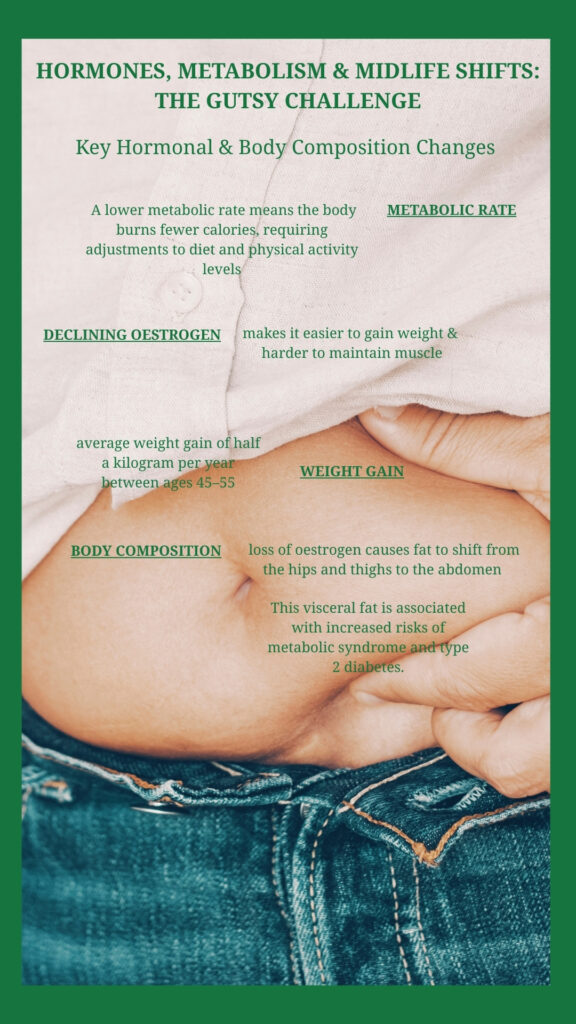
Hormonal Shifts: As oestrogen levels decline, the body experiences metabolic changes that make it easier to gain weight and harder to maintain muscle.

Body Composition: The loss of oestrogen causes fat to shift from the hips and thighs to the abdomen. This visceral fat is associated with increased risks of metabolic syndrome and type 2 diabetes.

Weight Gain: Women may experience an average weight gain of half a kilogram per year between ages 45–55.

Metabolic Rate: A lower metabolic rate means the body burns fewer calories, requiring adjustments to diet and physical activity levels

Your Gut on Perimenopause: The Microbiome Connection

If you’re suddenly dealing with constant bloating, gas, and digestive unpredictability, you’re not imagining it.

Perimenopause gut health is deeply intertwined with your hormones.

Oestrogen helps maintain the diversity and integrity of your gut lining and the trillions of microbes that live there. As hormones fluctuate, these microbiome shifts can lead to an imbalance, with less beneficial bacteria and more of the kinds that produce gas and inflammation. This is one of the most common bloating causes during this life stage. A less diverse microbiome can impair digestion, slow down gut motility, and compromise the gut barrier, contributing to systemic inflammation and worsening other perimenopause symptoms. Improving your digestive health is therefore not just about comfort; it’s a cornerstone of managing weight and overall well-being.

Core Nutrition Strategy 1: Master Your Macros for Metabolic Health

Fighting perimenopause symptoms requires a more strategic approach than simply eating less. Your body’s needs have changed, and your nutrition must adapt. By mastering your macronutrients protein, carbohydrates, and fats you can support your new metabolic reality, maintain muscle, and stabilise your energy levels.

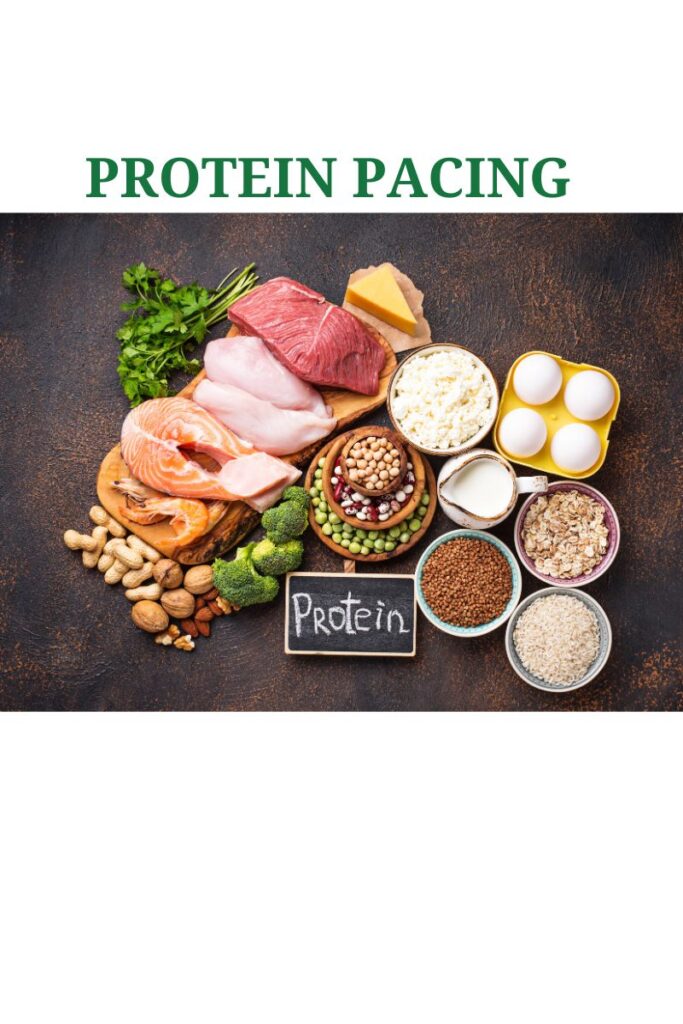
Protein Pacing: Your #1 Tool Against Muscle Loss and Fat Gain

During perimenopause, protein becomes your most valuable player. The decline in oestrogen accelerates sarcopenia, the age-related loss of muscle mass. Since muscle is metabolically active (it burns more calories at rest than fat), this muscle loss can slow down your metabolic rate.

A higher protein intake helps counteract this in several ways:

  • it provides the building blocks to preserve and build lean muscle,
  • it requires more energy to digest (thermic effect of food), and it is incredibly effective for promoting satiety, helping you feel fuller for longer.

A key perimenopause nutrition strategy is “protein pacing, distributing your intake evenly throughout the day. Instead of a small amount at breakfast and a huge portion at dinner, aim for a consistent protein per meal target of 25-30 grams. This ensures your body has a steady supply of amino acids for muscle repair and helps prevent the blood sugar spikes and crashes that drive cravings. Download my High protein recipe eBook here
Smart Carbs and Strategic Fibre for a Happy Gut

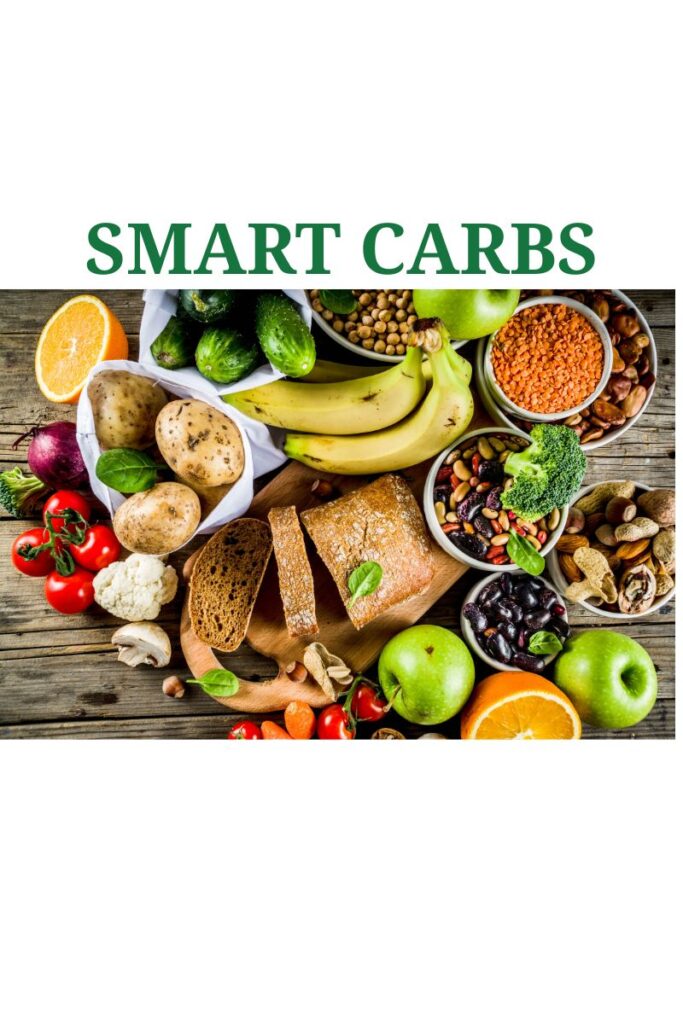
Carbohydrates are not the enemy, but the type and timing matter more than ever. The goal is to choose smart carbohydrates, complex, high-fibre sources like whole grains, legumes, and starchy vegetables, over refined ones. These carbs release glucose into your bloodstream slowly, promoting stable blood sugar balance and preventing the insulin spikes that encourage fat storage.
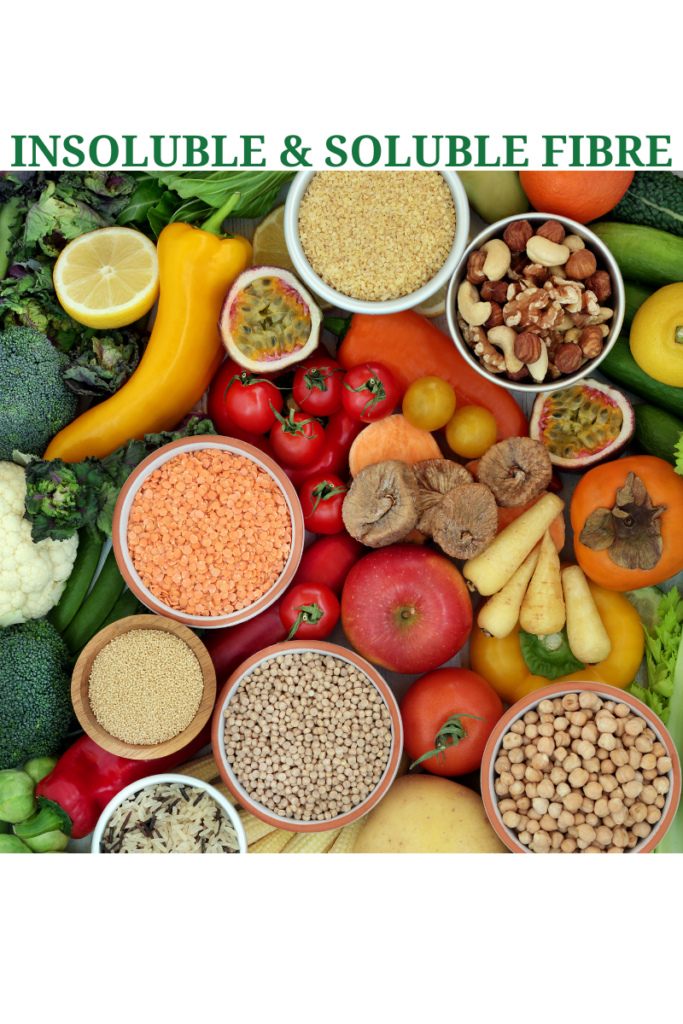
Fibre is a superstar for both metabolic and digestive health. It’s crucial to understand the two main types:

Soluble vs insoluble fibre:

  • Soluble fibre (found in oats, beans, apples, and carrots) dissolves in water to form a gel-like substance. It slows digestion, helps you feel full, and can lower cholesterol and blood sugar.
  • Insoluble fibre (in nuts, whole wheat, and cauliflower) adds bulk to stool, promoting regular bowel movements and preventing constipation.

Proper fibre timing is also key. Introducing high-fibre foods gradually and ensuring adequate hydration can help your gut adapt without causing excess bloating.
Why a Mediterranean-Style Diet Work

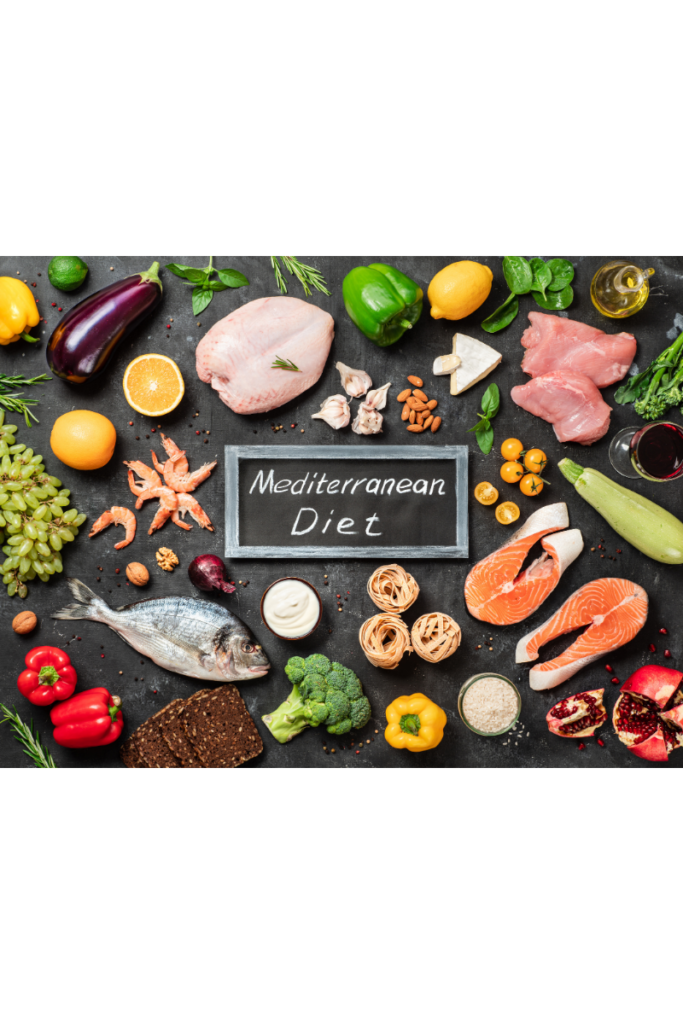
Instead of a restrictive diet, adopting a Mediterranean diet pattern offers a sustainable and delicious framework for perimenopause. This approach is rich in fruits, vegetables, whole grains, legumes, nuts, seeds, and healthy fats like olive oil, with moderate amounts of fish and poultry.

The metabolic benefits of this eating style are well-documented. It naturally provides ample fibre, antioxidants, and anti-inflammatory compounds. Evidence, such as the landmark PREDIMED Mediterranean diet trial in NEJM supporting metabolic benefits, shows its powerful effect on improving insulin sensitivity and supporting long-term heart health, which becomes a greater concern for women post-menopause.
Core Nutrition Strategy 2: Targeted Gut-Health Interventions

With bloating and digestive distress being such prominent complaints, directly supporting your gut is a non-negotiable part of a successful perimenopause plan. These targeted strategies go beyond basic nutrition to calm an irritated digestive system and rebuild a resilient gut environment.

Prebiotics & Probiotics: A Food-First, Evidence-Led Approach

You can actively nurture your gut microbiome through diet. A food-first approach is the safest and most effective starting point.
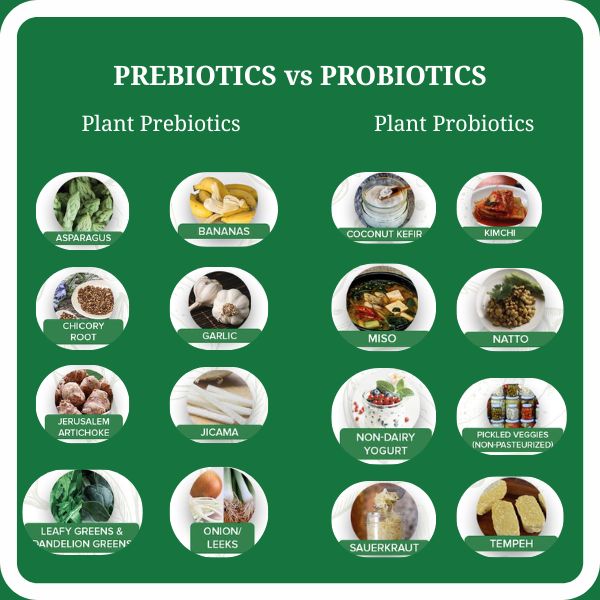
Infographic image of pre and probiotics foods on a green background with a white border

Prebiotic foods are types of fibre that feed your beneficial gut bacteria. Excellent sources include garlic, onions, leeks, asparagus, bananas (especially slightly green ones), and oats. Including a variety of these foods helps the good microbes flourish.

Probiotics are live beneficial bacteria found in fermented foods like plain yogurt, kefir, sauerkraut, kimchi, and miso.

When it comes to perimenopause supplements, the probiotic market can be confusing. While some probiotic strains like Lactobacillus rhamnosus GG and Bifidobacterium lactis have evidence for supporting gut health, many products lack sufficient research. The NIH NCCIH evidence summary on probiotics and safety is a useful resource for understanding the science. Prioritise getting probiotics from food and consult a knowledgeable practitioner before spending money on supplements.

Step-by-Step Low-Bloating Meal Structure

How you eat can be just as important as what you eat. To create low bloating meals, focus on mindful assembly and timing. This approach eases the digestive load on your system, providing one of the most immediate bloating fixes.

  1. Anchor with Protein: Start with your 25-30g portion of lean protein (e.g., chicken breast, fish, tofu, Greek yogurt).
  2. Add Non-Starchy Vegetables: Fill half your plate with well-cooked, low-gas vegetables like zucchini, spinach, bell peppers, and carrots. Raw cruciferous vegetables (broccoli, cauliflower) can be gas-producing for some; steaming or roasting them makes them easier to digest.
  3. Include a Smart Carb Strategically: Add a small portion (about ½ cup cooked) of a smart carbohydrate like quinoa, sweet potato, or brown rice.
  4. Finish with Healthy Fat: Incorporate a serving of healthy fat, such as a tablespoon of olive oil, a quarter of an avocado, or a small handful of nuts or seeds.
  5. Practice Mindful Meal Timing: Avoid eating large, heavy meals late at night. Proper meal timing, such as allowing 3-4 hours between meals and not eating within 2-3 hours of bedtime, gives your digestive system adequate time to process food, reducing the likelihood of overnight bloating and discomfort.

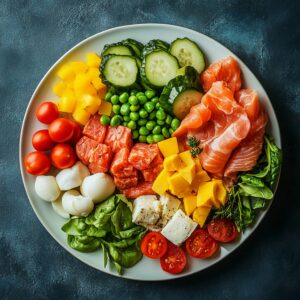
The Gutsy Solution Menopause Plate
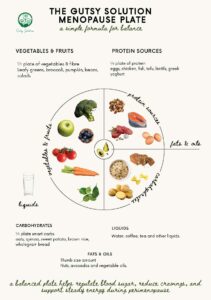
Your Action Plan: The 7-Day Clinician-Authored Perimenopause Meal Plan

Knowledge is powerful, but action creates change. To help you translate these strategies into your daily life, we’ve created the ultimate tool to get you started.

This downloadable 5-day meal plan is your roadmap to success. It takes all the guesswork out of what to eat, providing delicious, easy-to-prepare perimenopause recipes for breakfast, lunch, and dinner. Each day is designed to meet your protein targets, balance blood sugar, and incorporate gut-friendly foods. It also includes a complete shopping list to make your grocery store trip simple and efficient.

Here is a sample of what you can expect:

  • Breakfast: Greek Yogurt Parfait with Berries & Chia Seeds (30g protein)
  • Lunch: Chicken & veggie stir fry with brown rice (30g protein)
  • Dinner: Grilled Salmon, Quinoa, Steamed Broccoli, Drizzle of Olive Oil (30g protein )

Authored by Gutsy Solution, a registered nutritionist with lived perimenopause experience, this plan is both scientifically sound and realistic for a busy life.

Beyond Diet: Supplements and When to See Your Doctor

While nutrition is foundational, a few supplements have good evidence for supporting women during perimenopause. Common perimenopause supplements to consider discussing with your doctor include:

  • Magnesium: Can help with sleep, mood, and muscle relaxation.
  • Vitamin D: Crucial for bone health, which is a concern as estrogen declines.
  • Omega-3 Fatty Acids:** Have anti-inflammatory benefits that support heart and brain health. The

It’s vital to recognize when self-management isn’t enough. Certain menopause symptoms require medical attention. It’s time to know when to see a doctor if you experience any of the following:

  • Severe mood swings, anxiety, or depression that interfere with your daily life.
  • Persistent fatigue that isn’t improved by rest. *
  • Heavy or irregular bleeding. *
  • Heart palpitations. *
  • Severe hot flashes or night sweats that disrupt your sleep and quality of life.
  • Your doctor can discuss other options, including hormone therapy.

A Guide to Menopause provides lots of information and resources for perimenopause and menopause. You can alos get information from the Australian Menopause Society.

There are also a number of current practising medical doctors that provide free, up to date advice on menopause through their websites and social media including Dr Louise Newsome, Dr Naomi Potter & Dr Mary Clare Haver.

Managing perimenopause weight gain and bloating can feel like an uphill battle, but it is absolutely achievable with a targeted, gut-first nutrition strategy. Your body is not broken; it’s simply adapting to a new hormonal reality. By shifting your focus from calorie counting to nutrient quality prioritising protein, embracing strategic fibre, and nurturing your microbiome health you can empower yourself to take control of these changes. You can feel strong, energized, and comfortable in your body again. Your journey to a calmer gut and a healthier body starts now.

Download our exclusive 5-Day Perimenopause Rescue Meal Plan to begin today. For personalized support, consider booking a free 15-minute discovery call.

Frequently Asked Questions

1. Why am I gaining belly fat when my diet hasn’t changed?

This is a classic sign of perimenopause. The primary cause is declining estrogen, which changes how your body stores fat. It shifts fat distribution from the hips and thighs to the abdomen (visceral fat) and can also lead to mild insulin resistance, making it easier for your body to store calories as fat rather than use them for energy.

2. What is the most important food to eat for perimenopause weight management?

If you have to pick one, it’s protein. Prioritising protein is critical for fighting age-related muscle loss, which keeps your metabolism from slowing down. It’s also highly satiating, helping to control appetite and cravings, and it supports stable blood sugar levels.

3. Can I really reduce bloating without a super restrictive diet?

Yes, absolutely. For many women, relief comes from *how* they eat, not just *what* they eat. Simple changes like managing fiber timing (e.g., cooking fibrous vegetables well), ensuring you’re well-hydrated, eating mindfully without rushing, and avoiding large meals late at night can significantly reduce bloating.

4. Are all probiotics for menopause a waste of money?

Not all, but many are marketed with claims that lack strong scientific evidence. The best approach is to start with food-first sources like plain kefir, yogurt, and sauerkraut. If you consider a supplement, look for products that specify the exact probiotic strains and have been studied in human clinical trials for the benefits you seek.

5. How much protein should I aim for each day during perimenopause?

A general evidence-based guideline for active women in midlife is around 1.2 to 1.6 grams of protein per kilogram of body weight. However, a simpler and more practical target is to aim for 25-30 grams of high-quality protein with each of your three main meals. This “protein pacing” approach is highly effective for muscle maintenance and satiety.

Author Note This article was written by Gutsy Solution, a Registered Nutritionist (B. Nut Sc) who specialises in perimenopause and menopause nutrition. Her advice is informed by current clinical research and her own lived experience navigating the challenges of midlife hormonal changes. All scientific claims are anchored to high-authority research from institutions like the National Institutes of Health and leading medical journals but do not constitute medical advice.

Medical Disclaimer — Gutsy Solution

Important — Read Carefully

The information, content, materials, and resources provided by Gutsy Solution (including on our website, in emails, in printed materials, and in any digital or audio/video content) are for educational and informational purposes only and are not intended to be a substitute for professional medical advice, diagnosis, or treatment.

Not medical advice. Nothing provided by Gutsy Solution constitutes medical advice. Do not rely on our content to make decisions about your health. Always seek the guidance of a qualified healthcare professional with any questions you may have regarding a medical condition or treatment.

Menopause and Weight Gain: The Science and the Risks Part 2

This entry is part 2 of 2 in the series Menopause & Weight

In our previous post, we explored the science behind menopause-related weight gain and the health risks associated with it. Now, it’s time to turn knowledge into action. The encouraging news is that weight gain during menopause isn’t inevitable — there are scientifically proven strategies that can help prevent or reduce it.

In this article, we’ll uncover the most effective, evidence-based approaches, from nutrition and exercise to hormone therapy and lifestyle adjustments, so you can work with your body during this transition rather than against it.

Lifestyle Factors That Influence Weight Gain

Hormones set the stage, but lifestyle can either worsen or improve the picture.

Sleep Disruptions and Weight

Menopause often brings insomnia or sleep apnea. Poor sleep increases ghrelin and lowers leptin, driving appetite and late-night snacking. Studies show that just 21 days of sleep restriction increases belly fat by nearly 10%.

sleeping pill and digital clock on bedside table
Photo by cottonbro studio on Pexels.com

Stress, Cortisol, and Emotional Eating

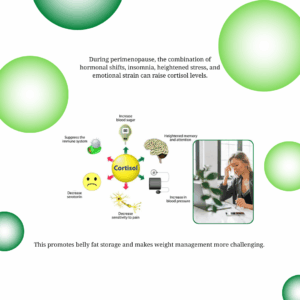
High stress raises cortisol, which promotes central fat storage. Combined with emotional eating, this accelerates belly fat gain.

Healthy balanced plate with salmon, fresh vegetables, mozzarella, feta, and mango arranged in a colourful, nutrient-rich meal.

Impact of Medications

Some medications prescribed during midlife — like SSRIs, SNRIs, and beta blockers — can contribute to weight gain. Discuss alternatives with your doctor if this is a concern.

What Actually Works: Evidence-Based Solutions

The good news? Menopausal weight gain isn’t inevitable. Here’s what research shows really works.

Resistance Training – The Non-Negotiable Foundation

Woman in a gym preparing to lift a barbell, wearing athletic clothing and sneakers, in a black-and-white photo emphasizing strength and focus.
Photo by Jake “Sulli” Swoyer: https://www.pexels.com/photo/woman-lifting-a-barbell-4373472/
  • Reduces visceral and subcutaneous fat
  • Increases muscle mass and strength
  • Improves blood sugar and lowers inflammation

A 15-week resistance training program showed significant reductions in belly fat.1-2 Just 2–3 sessions per week make a measurable difference.

Protein Intake – Why Women Need More

Healthy balanced plate with salmon, fresh vegetables, mozzarella, feta, and mango arranged in a colourful, nutrient-rich meal.
irina-del-Mha5nyvZ2G4-unsplash

Women in menopause need 1.2–1.6 g of protein per kg of body weight daily. Protein supports muscle maintenance, increases satiety, and improves energy.3-4

Aim for 30g per meal spread throughout the day.

Plant-Forward, High-Fiber Diets

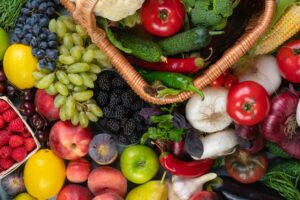
Colourful assortment of fresh fruits and vegetables, including tomatoes, grapes, peppers, berries, and greens spilling from a wicker basket.
david-foodphototasty-FGrO63vUbaA-unsplash

Fiber supports gut health, reduces inflammation, and improves insulin sensitivity. Women should aim for 35–40g of fiber daily from fruits, vegetables, legumes, nuts, and seeds.5-6

Exercise Timing – Morning vs. Evening Workouts

Studies show that women who exercise before breakfast burn more belly fat and lower blood pressure compared to evening exercisers.

The Role of Yoga, Squats, and Lunges

Woman performing a lunge exercise outdoors, wearing fitness clothing and sneakers, demonstrating strength and balance.
jonathan-borba-L5VjCZp0ZSY-unsplash
  • Yoga reduces cortisol and belly fat by lowering stress hormones.
  • Squats and lunges engage large muscle groups, boosting calorie burn and fat loss.

Hormone Replacement Therapy and Weight Management

Does HRT Cause Weight Gain?

Contrary to popular belief, hormone replacement therapy (HRT) does not cause weight gain.

Estrogel 80-gram pump dispenser and box showing dosage information and labeling for prescription hormone replacement therapy containing estradiol.
Estrogel_Australia

Benefits of HRT for Metabolic Health

  • Reduces visceral fat accumulation
  • Improves insulin sensitivity
  • Enhances sleep, mood, and energy—making weight management easier

HRT isn’t for everyone, but it can be life-changing when appropriate.

What Doesn’t Work – Common Mistakes to Avoid

  • Extreme calorie restriction → causes muscle loss and slows metabolism
  • Cardio-only exercise → doesn’t address muscle decline
  • Generic diet programs → ignore hormonal realities
  • Shame-based approaches → raises cortisol and worsen belly fat

A Comprehensive Lifestyle Approach That Works

The most successful strategies combine multiple elements:

  • Resistance training 2–3 times weekly
  • Adequate protein at each meal
  • Plant-based, high-fiber eating
  • Prioritizing 7–8 hours of quality sleep
  • Stress management (yoga, meditation, massage)
  • Supportive community or accountability partner

Consistency beats perfection. Meaningful changes typically take 12–16 weeks.

The Mindset Shift: It’s Not Your Fault

One of the most empowering shifts is realizing that menopausal weight gain isn’t a failure of willpower. It’s a predictable physiological response.

Once you understand this, you can stop blaming yourself and start working with your body instead of fighting against it.

Emerging Research and What We Still Need to Learn

Researchers are now studying:

  • Combination therapies (diet + exercise + HRT)
  • Long-term resistance training protocols
  • The link between menopause and other chronic conditions

While much progress has been made, more menopause-specific research is still needed.

Practical Tips to Start Today

  1. Lift weights at least twice a week
  2. Eat 30g of protein per meal
  3. Walk 30–45 minutes daily
  4. Add yoga or meditation twice a week
  5. Aim for 7–8 hours of sleep
  6. Reduce added sugars and processed foods

FAQs on Menopause and Weight Gain

Q1: Is weight gain during menopause inevitable?
Not inevitable, but very common due to hormonal and metabolic changes. Lifestyle interventions can help prevent or reduce it.

Q2: How much weight do women usually gain during menopause?
On average, women gain 10kg (22 lbs) during the transition.

Q3: What type of exercise is best for menopause belly?
A combination of resistance training, cardio, and yoga works best.

Q4: Does HRT help with weight loss?
HRT doesn’t directly cause weight loss but can help manage sleep, mood, and energy, making weight control easier.

Q5: Can diet alone reduce menopause belly?
Diet is crucial, but without resistance training, muscle loss continues, making long-term results harder.

Q6: How long does it take to see results?
Most women notice changes in 12–16 weeks of consistent effort.

Conclusion: Work With Your Body, Not Against It

Menopausal weight gain can feel discouraging, but it’s not your fault—it’s biology. The good news is that by understanding the science and applying proven strategies, you can manage your weight, reduce health risks, and feel stronger than ever.

The key is consistency, not perfection. With the right combination of resistance training, protein-rich nutrition, sleep, stress management, and possibly hormone therapy, you can take charge of your health during menopause and beyond.

👉 Remember, your body isn’t broken—it’s simply following a new script. And with the right tools, you can write a healthier chapter.

References

  • 1. Nilsson, S., Hammar, M., West, J., Borga, M., Thorell, S., & Spetz Holm, A. C. (2023). Resistance training decreased abdominal adiposity in postmenopausal women. Maturitas176, 107794. https://doi.org/10.1016/j.maturitas.2023.107794
  • 2. Khalafi, M., Habibi Maleki, A., Sakhaei, M. H., Rosenkranz, S. K., Pourvaghar, M. J., Ehsanifar, M., Bayat, H., Korivi, M., & Liu, Y. (2023). The effects of exercise training on body composition in postmenopausal women: a systematic review and meta-analysis. Frontiers in endocrinology14, 1183765. https://doi.org/10.3389/fendo.2023.1183765
  • 3. Silva Ramirez, V. V., Oelmann, A., Holtje, J., Shannahan, L., Shelton, G., Nguyen, N., Sims, S. T., Greece, J. A., Pyott, L., Lyon, G., Ormsbee, M. J., & Campbell, B. I. (2025). Survey study of changes in total caloric and protein intake across the menopause transition: a preliminary analysis. Journal of the International Society of Sports Nutrition, 22(Suppl 2), 2550192. https://doi.org/10.1080/15502783.2025.2550192
  • 4. Paul, C., Leser, S., & Oesser, S. (2019). Significant Amounts of Functional Collagen Peptides Can Be Incorporated in the Diet While Maintaining Indispensable Amino Acid Balance. Nutrients, 11(5), 1079. https://doi.org/10.3390/nu11051079
  • 5. Mantzoros C. S. (1999). The role of leptin in human obesity and disease: a review of current evidence. Annals of internal medicine, 130(8), 671–680. https://doi.org/10.7326/0003-4819-130-8-199904200-00014
  • 6. Yu, K., Ke, M. Y., Li, W. H., Zhang, S. Q., & Fang, X. C. (2014). The impact of soluble dietary fibre on gastric emptying, postprandial blood glucose and insulin in patients with type 2 diabetes. Asia Pacific journal of clinical nutrition, 23(2), 210–218. https://doi.org/10.6133/apjcn.2014.23.2.01

Menopause and Weight Gain: The Science and the Risks Part 1

This entry is part 1 of 2 in the series Menopause & Weight

Why Menopause Changes Your Body

If you’re in your 40s or 50s and suddenly notice your waistline expanding despite eating and exercising the same way as before, you’re not alone. Many women describe thier menopausal weight gain as if a balloon inflated in their midsection overnight. Clothes no longer fit the same, energy levels dip, and frustration grows.

Here’s the important truth: nothing is wrong with you. These changes aren’t a sign of weakness or failure – they’re the predictable result of hormonal changes during perimenopause and menopause. It has nothing to do with your willpower or letting yourself go or being lazy.

Weight gain in midlife isn’t just about the number on the scale. It’s about shifts in body composition, metabolism, and fat distribution. Understanding these changes is key to managing them — and the good news is, there are proven strategies to help.

What Exactly Is “Menopause Belly”?

woman in a tracksuit holding her belly fat to signify menopasue weight gain
Photo by Andres Ayrton: https://www.pexels.com/photo/woman-showing-her-belly-6551492/

When people talk about “meno-belly” or “menopot,” they’re describing a specific pattern of fat gain that occurs during the menopausal transition.

Unlike general weight gain, this belly fat often develops even when a woman’s overall weight doesn’t change. In fact, many women report that while their arms and legs get thinner, their waistline grows larger. They also often say that they are not doing anythig different, their diet and excerise hasnt changed at all but their weight keeps increasing and they can’t lose the weight the way they used to in their 20’s or 30’s.

Subcutaneous vs. Visceral Fat

Subcutaneous fat sits directly under the skin. It’s soft and pinchable — the “muffin top” that spills over waistbands. While annoying, it’s less concerning for long-term health.

Visceral fat, the weight gain we often see on our bellies in menopause, on the other hand, is far more dangerous. It lies deep inside the abdomen, wrapping around vital organs like the liver, intestines, and stomach. Unlike subcutaneous fat, visceral fat is metabolically active, releasing inflammatory substances that disrupt health.

Why Visceral Fat Is More Dangerous

Visceral fat isn’t just a cosmetic issue — it’s a metabolic one. It increases the risk of:

  • Cardiovascular disease
  • Type 2 diabetes
  • High blood pressure
  • Insulin resistance
  • Certain cancers

That’s why many healthcare providers measure waist circumference or waist to hi ratio as an indicator of disease risk. A growing belly during menopause isn’t just about how you look — it’s about what’s happening inside your body.

The Science Behind Menopausal Weight Gain

close up of microscope
Photo by Pixabay on Pexels.com

Menopausal weight gain is driven by a complex interplay of hormones, metabolism, and ageing. Let’s break it down.

Hormonal Changes Driving Fat Redistribution

Oestrogen Decline

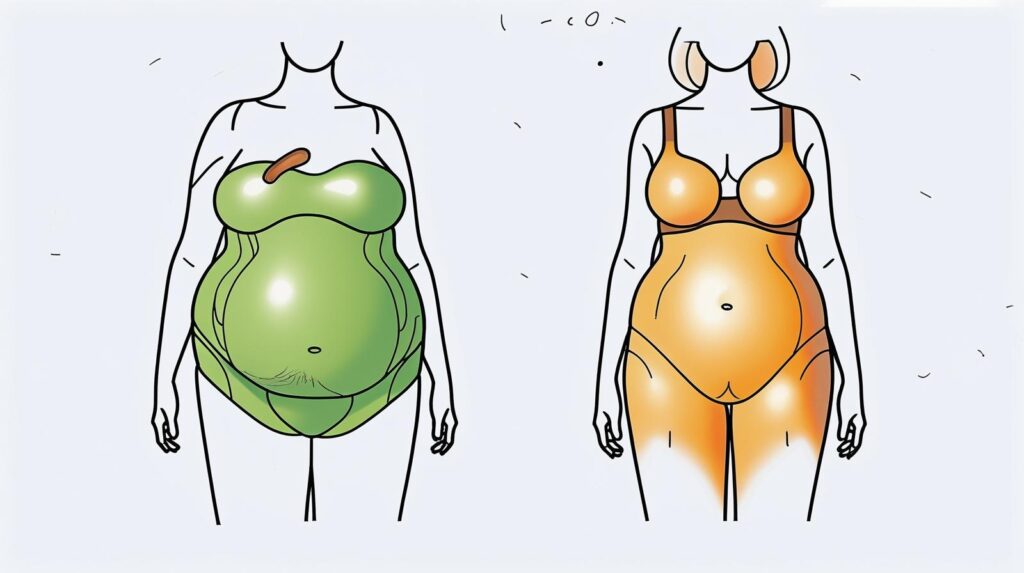
Oestrogen regulates metabolism and fat storage. In reproductive years, it directs fat toward the hips and thighs (the “pear shape”).

But as estrogen declines, fat storage shifts to the abdomen, resulting in an “apple shape.”

Increased Availability of Testosterone

With lower oestrogen, testosterone becomes more dominant. This hormonal imbalance encourages abdominal fat accumulation, making belly fat almost inevitable for many women.

Changes in Hunger Hormones

Leptin is a hormone your body releases that helps it maintain your normal weight on a long-term basis. The level of leptin in your blood is directly related to how much body fat you have. Leptin resistance causes you to feel hungry and eat more even though your body has enough fat stores.

Ghrelin is a hormone your stomach produces and releases. It signals your brain when your stomach is empty and it’s time to eat. Ghrelin levels increase between mealtimes and decrease when your stomach is full. People who have obesity often have low ghrelin levels, while people who significantly restrict their calorie intake have high ghrelin levels.

Leptin levels decrease, reducing natural appetite suppression.

Ghrelin levels rise, especially with poor sleep, increasing hunger and cravings.

This hormonal shift explains why many women feel hungrier and have a harder time controlling food intake during menopause.

Metabolic Slowdown

Research1 shows that women who transition to menopause experience:

  • A 32% reduction in fat burning (oxidation)
  • A 1.5x greater decline in energy expenditure during sleep

This means your metabolism is slower, even when you’re resting.

Muscle Mass Decline and Its Role in Weight Gain

Muscle burns more calories at rest than fat. Unfortunately, menopause accelerates muscle loss:

  • After 50, women lose 5–10% of muscle mass every decade.2
  • The SWAN study found that lean muscle declines while fat accumulation doubles during menopause.3

Less muscle means fewer calories burned, which makes weight gain easier and weight loss harder.

Inflammation and Fat Tissue Dysfunction

Menopause isn’t just about fat gain — wjhit’s about changes in the fat tissue itself. Research shows that postmenopausal women experience:

  • Larger fat cells (adipocyte hypertrophy)
  • Increased inflammation
  • Fibrosis (scar tissue in fat cells)

This makes fat tissue metabolically unhealthy, driving insulin resistance and worsening belly fat.4

Numbers That Tell the Story

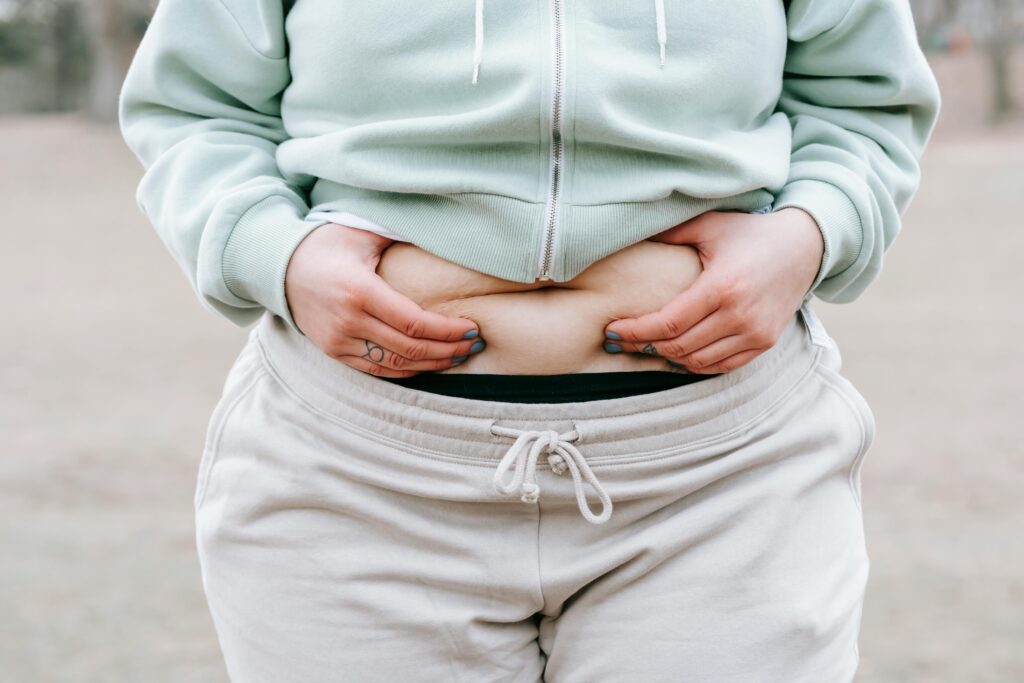
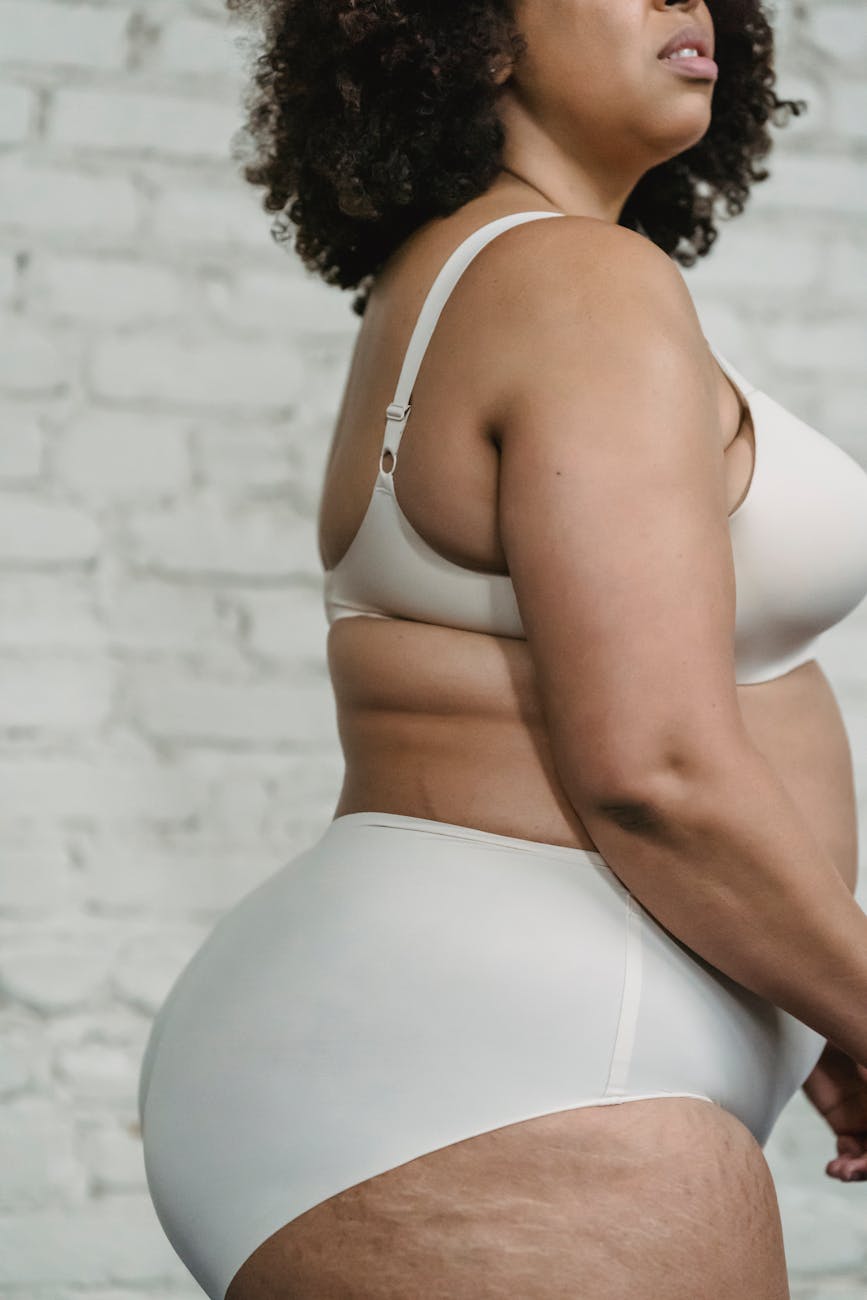
crop plump black woman in underwear

  • 65.5% of women aged 40–59 have abdominal obesity
  • 73.8% of women aged 60+ have abdominal obesity
  • Average weight gain during menopause transition: 10kg (22 lbs)
  • Visceral fat doubles from 5–8% to 10–15% of body weight

These numbers highlight why menopausal weight gain isn’t an isolated experience — it’s nearly universal.

Health Risks of Menopausal Weight Gain

Belly fat during menopause isn’t just frustrating — it’s dangerous.

Heart Disease and High Blood Pressure

Visceral fat releases inflammatory cytokines that damage blood vessels and raise blood pressure. This significantly increases the risk of heart disease, the leading cause of death in women.

Type 2 Diabetes and Insulin Resistance

Belly fat promotes insulin resistance, making it harder for the body to regulate blood sugar, increasing the risk of type 2 diabetes.

Cancer, Dementia, and Metabolic Syndrome

Research links abdominal obesity to higher risks of breast cancer, colorectal cancer, and even dementia. It also contributes to metabolic syndrome — a cluster of conditions including high blood pressure, high blood sugar, and abnormal cholesterol.4-7

Whilst understanding the science behind menopausal weigh gain and its associated health risks is the first step, the good news is ther aree proven, practical strategies to help prevent or reduce it.

In our next post, we’ll dive into the evidence-based solutions – covering nutrition, exercise, hormone therapy, and lifestyle interventions – that can make a real difference during the menopause transition.

Stay tuned for Part 2, where we’ll focus on what actually works to support your health, energy and confidence.

References

  • 1. Lovejoy, J. C., Champagne, C. M., de Jonge, L., Xie, H., & Smith, S. R. (2008). Increased visceral fat and decreased energy expenditure during the menopausal transition. International journal of obesity (2005)32(6), 949–958. https://doi.org/10.1038/ijo.2008.25
  • 2. Mitchell, W. K., Williams, J., Atherton, P., Larvin, M., Lund, J., & Narici, M. (2012). Sarcopenia, dynapenia, and the impact of advancing age on human skeletal muscle size and strength; a quantitative review. Frontiers in physiology3, 260. https://doi.org/10.3389/fphys.2012.00260
  • 3. Harlow, S. D., Burnett-Bowie, S. M., Greendale, G. A., Avis, N. E., Reeves, A. N., Richards, T. R., & Lewis, T. T. (2022). Disparities in Reproductive Aging and Midlife Health between Black and White women: The Study of Women’s Health Across the Nation (SWAN). Women’s midlife health8(1), 3. https://doi.org/10.1186/s40695-022-00073-y
  • 4. Abildgaard, J., Ploug, T., Al-Saoudi, E., Wagner, T., Thomsen, C., Ewertsen, C., Bzorek, M., Pedersen, B. K., Pedersen, A. T., & Lindegaard, B. (2021). Changes in abdominal subcutaneous adipose tissue phenotype following menopause is associated with increased visceral fat mass. Scientific reports11(1), 14750. https://doi.org/10.1038/s41598-021-94189-2
  • 5. UK Biobank 2023
  • 6. Lizcano, F., & Guzmán, G. (2014). Estrogen Deficiency and the Origin of Obesity during Menopause. BioMed research international2014, 757461. https://doi.org/10.1155/2014/757461
  • 7. Davis, S. R., Castelo-Branco, C., Chedraui, P., Lumsden, M. A., Nappi, R. E., Shah, D., Villaseca, P., & Writing Group of the International Menopause Society for World Menopause Day 2012 (2012). Understanding weight gain at menopause. Climacteric : the journal of the International Menopause Society15(5), 419–429. https://doi.org/10.3109/13697137.2012.707385